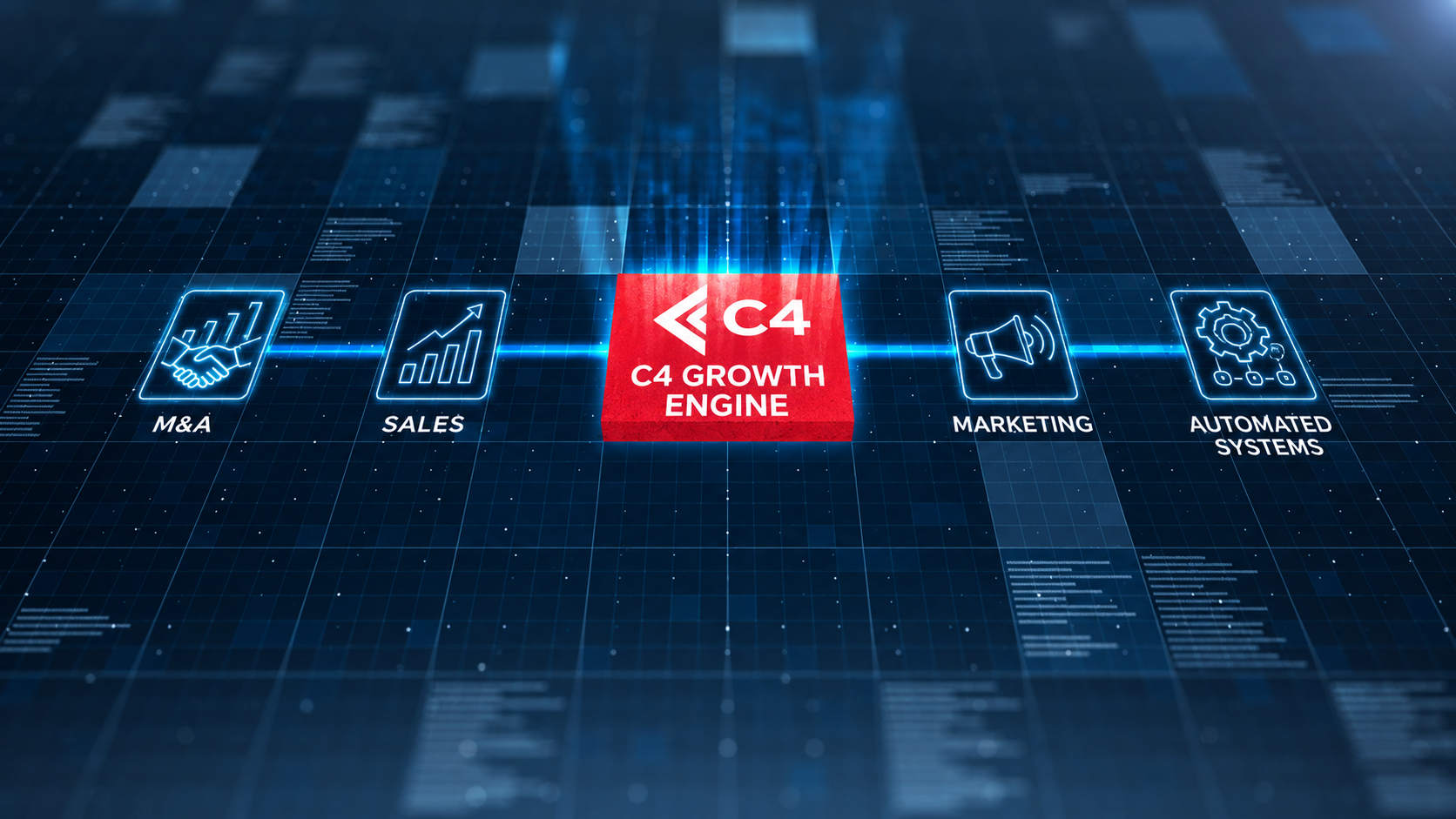
Inorganic vs. Organic Growth for MSPs: Which Path Is Right for You?
Most MSPs frame this wrong. It’s not organic vs inorganic. It’s when to use each. If your foundation isn’t built, acquisitions don’t accelerate growth. They expose what’s already broken.

The short version
- Organic growth builds the engine. Inorganic growth scales it. Skip the first, and the second breaks.
- Most MSPs jump to M&A because organic growth stalled — not because acquisition is the right strategy.
- If your operations aren’t standardized at $3M, they’ll be a bigger problem at $10M.
- The right question isn’t either/or. It’s what sequence.
Most MSPs frame this wrong. It’s not organic vs inorganic. It’s when to use each.
Here’s the reality:
Organic growth builds the engine. Inorganic growth scales the engine. Skip the first, and the second breaks.
If your foundation isn’t built, acquisitions don’t accelerate growth. They expose what’s already broken.
What Organic vs. Inorganic Growth Actually Means in an MSP
Organic Growth
- Net new clients
- Expansion revenue
- Pricing and packaging improvements
- Sales and marketing systems
Inorganic Growth
- Acquisitions
- Mergers
- Roll-ups
One is built. One is bought. And they require completely different operational maturity.
Why Most MSPs Start with Organic Growth (And Why It Breaks)
Organic growth isn’t the issue. Most MSPs just never operationalize it.
The Founder Trap
- Works until ~30–35 employees or $5–7M
- The owner becomes the decision engine
- Everything routes through them
No Standardization
- Every client is custom
- No repeatable delivery model
- Margins erode as complexity increases
Reactive Operations
- “Managed services” still running like break-fix
- No automation
- No predictability
Sales Is Usually the Actual Bottleneck
This is where things really break.
- No consistent pipeline
- Referral-dependent growth
- Messaging is technical, not outcome-driven
You’ll hear: “We manage endpoints.”
Instead of: “We reduce downtime by 30%.”
That gap shows up in long sales cycles, low close rates, and inconsistent revenue.
Organic growth doesn’t fail. Most MSPs never build a real growth engine.
Why Inorganic Growth Looks So Attractive
When growth slows, M&A starts to look like the shortcut.
What Acquisitions Promise
- Instant revenue
- Immediate client base
- Faster expansion
And the market reinforces it: 4–6x EBITDA multiples, ~0.8–1.2x revenue, and 70–90% recurring revenue makes MSPs highly attractive targets.
The Real Reason MSPs Jump to M&A Too Early
It’s not strategy. It’s pressure.
- Growth stalled
- Sales engine isn’t working
- Leadership wants momentum
They’re not choosing a strategy. They’re reacting to stalled execution.
Where Inorganic Growth Actually Breaks
This is where most content stops. This is where reality starts.
Acquisitions don’t fail on spreadsheets. They fail in operations.
No Standardization = Integration Chaos
- Different PSA tools
- Different RMM stacks
- Different delivery models
- Nothing connects
Culture Misalignment
- Teams operate differently
- No shared expectations
- No unified service standard
What looked like “synergy” becomes friction.
You Just Scaled Your Problems
- Bad clients → more bad clients
- Weak margins → multiplied
- Inefficiency → amplified
If your ops are broken at $3M, they’re just bigger at $10M.
The 35-Employee Wall (Where This Decision Gets Real)
This is the inflection point where growth slows, profit shrinks, and chaos increases — all at the same time.
This Is the Fork in the Road
Path 1: Fix the Engine (Organic First)
- Standardize delivery
- Build a sales system
- Clean up your client base
Path 2: Skip Ahead (M&A Too Early)
- Buy revenue without fixing ops
- Create integration complexity
- Stall again — just at a bigger scale
The Right Answer: It’s Not Either/Or — It’s Sequence
This is the strategy most MSPs miss.
The C4 Growth Sequence
Here’s the sequence we use with clients:
- Prove Demand (Organic) — Validate market, build initial traction
- Build the Engine (Organic) — Sales system, standardized delivery, defined ICP
- Accelerate (Inorganic) — Strategic acquisitions, expand capabilities, enter new markets
- Hybrid Scale — Organic + inorganic working together, repeatable integration model
If you can’t grow organically, you can’t integrate acquisitions.
When an MSP Is Actually Ready for Inorganic Growth
You’re Ready If
- You have a predictable pipeline
- Services are standardized
- Margins are stable
- Leadership isn’t founder-dependent
- Tech stack is consolidated
You’re Not Ready If
- Growth depends on referrals
- Every client is different
- Owner is still in daily ops
- Margins fluctuate
- Tool stack is messy
Our Takeaway
Organic growth builds discipline. Inorganic growth tests it.
Most MSPs don’t fail because of strategy. They fail because they skip sequence.
If you’re stuck between $3M and $10M and thinking about acquisition, the question isn’t whether M&A works. It’s whether your business is ready to absorb it.
Frequently Asked Questions
What is the difference between organic and inorganic growth for an MSP?
Organic growth comes from net new clients, expansion revenue, pricing improvements, and stronger sales and marketing systems. Inorganic growth comes from acquisitions, mergers, and roll-ups. One is built, one is bought, and the two require very different levels of operational maturity.
Should an MSP grow organically or pursue acquisitions?
It’s not either/or — it’s sequence. Organic growth builds the engine. Inorganic growth scales the engine. If the operational engine isn’t built first, acquisitions amplify what’s already broken rather than accelerate growth.
When is an MSP ready for inorganic growth?
An MSP is ready when it has a predictable sales pipeline, standardized services, stable margins, leadership that isn’t founder-dependent, and a consolidated tech stack. If growth still depends on referrals and the owner runs daily operations, the MSP isn’t ready.
Why do MSP acquisitions often fail?
Most MSP acquisitions break in operations, not on spreadsheets. Different PSA tools, RMM stacks, delivery models, and team cultures create integration friction. Acquiring without standardization scales weak margins and bad clients rather than fixing them.
Organic growth is the cheaper path, but it still has to be executed by someone. If you’re weighing outside help, see the 10 best national MSP marketing firms and our MSP marketing agency comparison guide.
Build the engine. Then scale it.
If you’re looking at growth — organic or acquisition — and aren’t sure what’s actually holding you back, that’s the work we do. We help MSPs build real sales engines, standardize operations, and prepare for acquisition the right way.
Book a Growth Strategy Session